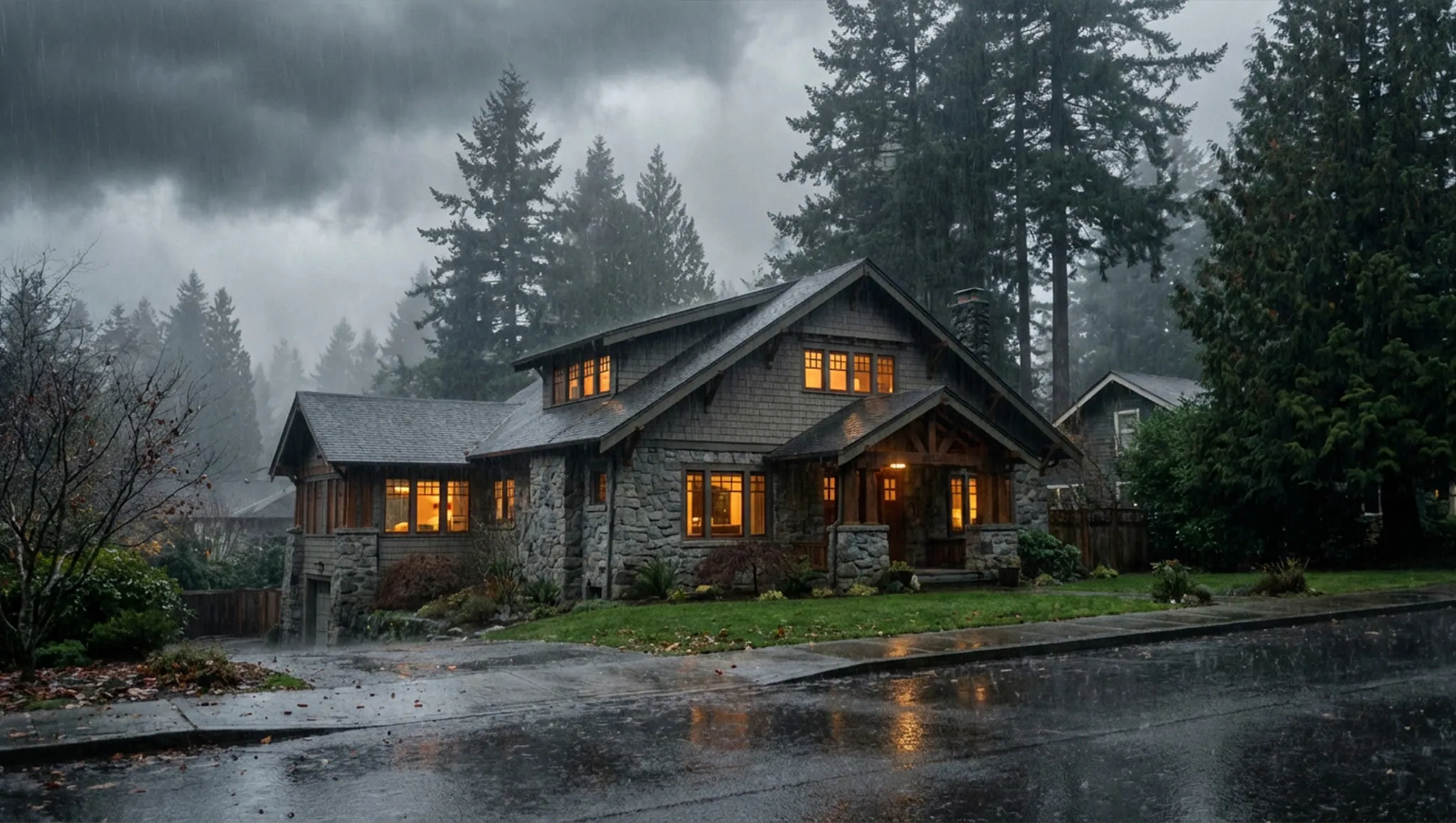
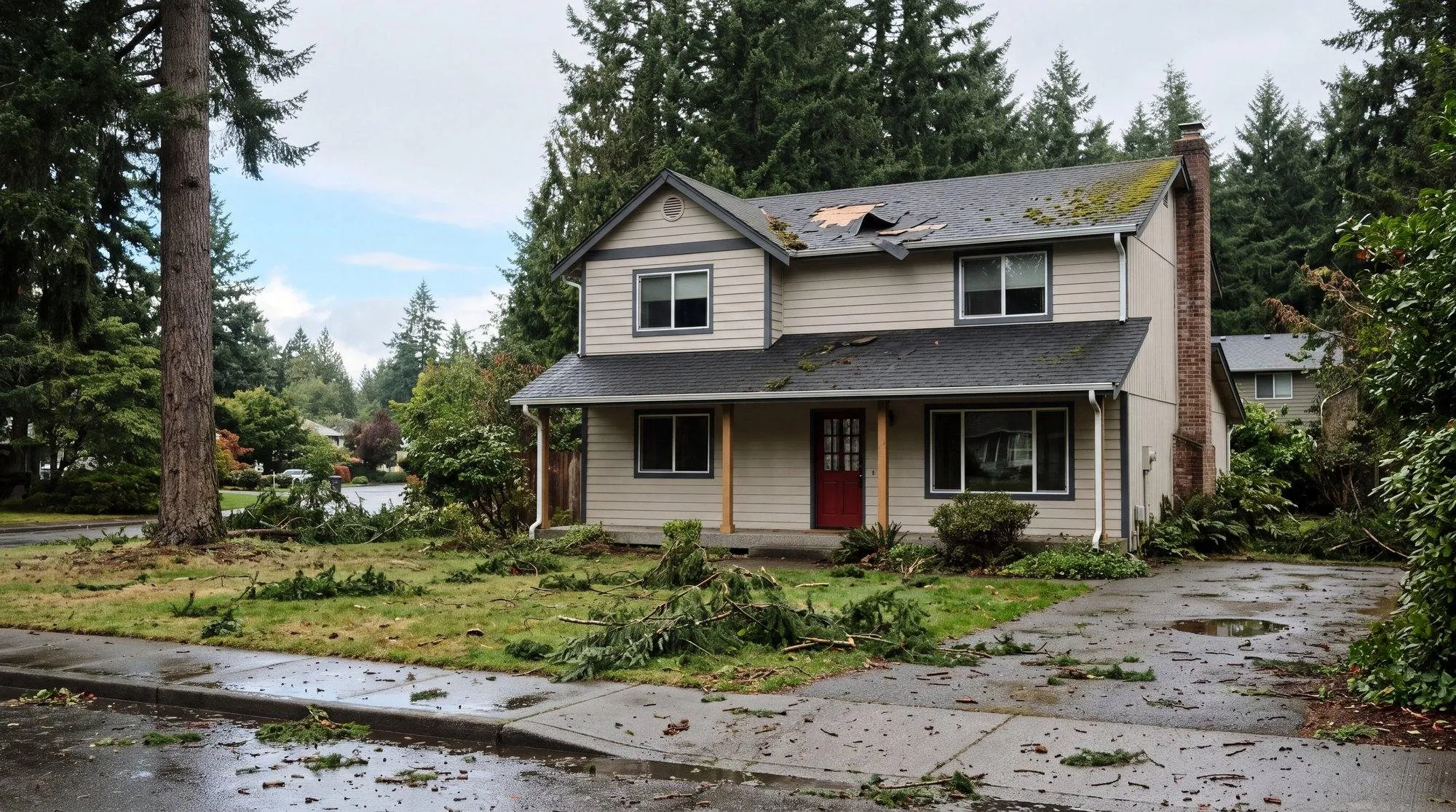
Living in the Pacific Northwest creates a special relationship with storms unlike anywhere else in the country. Through years of helping homeowners recover from weather-related damage, our team has developed specialized understanding of the region's unique weather patterns and construction methods. That knowledge proves essential for effective repairs and preventative measures.
Many Northwest homeowners have experienced how quickly minor storm damage can escalate in our climate. What begins as a few displaced shingles during a wind event can rapidly develop into significant issues when combined with our persistent rainfall. Regional experience emphasizes that even seemingly minor damage warrants immediate attention. Wind-driven rain infiltration finds paths through compromised roofing, tree impacts from saturated soil conditions topple seemingly healthy trees onto homes, moss-compromised roofing systems fail under stress, overwhelmed drainage networks flood basements and crawl spaces, and extended power interruptions complicate recovery efforts.
Secondary developments follow quickly in our moist climate. Concealed moisture penetration spreads behind walls and ceilings where you can't see it developing. Rapidly progressing wood deterioration affects structural framing in ways that dry climates never experience. Mold establishment begins within 24 to 48 hours of water intrusion. Foundation water challenges emerge when drainage systems fail during heavy rainfall. Progressive structural complications develop as moisture weakens connections and deteriorates materials. Document all visible damage immediately, regardless of apparent severity. Our consistent moisture means seemingly minor issues can quickly develop into significant problems requiring extensive remediation.
First Steps Following Storm Impact
When evaluating storm aftermath in our climate, safety must be the primary consideration before addressing any repairs. Electrical system safety requires professional assessment if water has contacted any electrical components, outlets, or panels. Gas line integrity demands immediate utility company inspection if you smell gas or suspect damage to lines. Structural stability evaluation by qualified professionals becomes necessary when you observe sagging rooflines, cracked walls, or compromised framing. Water entry identification helps prevent ongoing damage while you arrange permanent repairs. Tree hazard evaluation addresses not just trees that have fallen but those compromised by wind or saturated soil that threaten additional damage.
Maintain emergency provisions in waterproof storage including flashlights, batteries, battery-powered radio, first aid supplies, bottled water, and non-perishable food. Include additional moisture protection equipment specifically suited for Northwest conditions: heavy-duty tarps, sandbags, dehumidifiers, and fans prove invaluable during extended power outages and the persistent rainfall that often accompanies our storms.
Documentation That Protects Your Interests
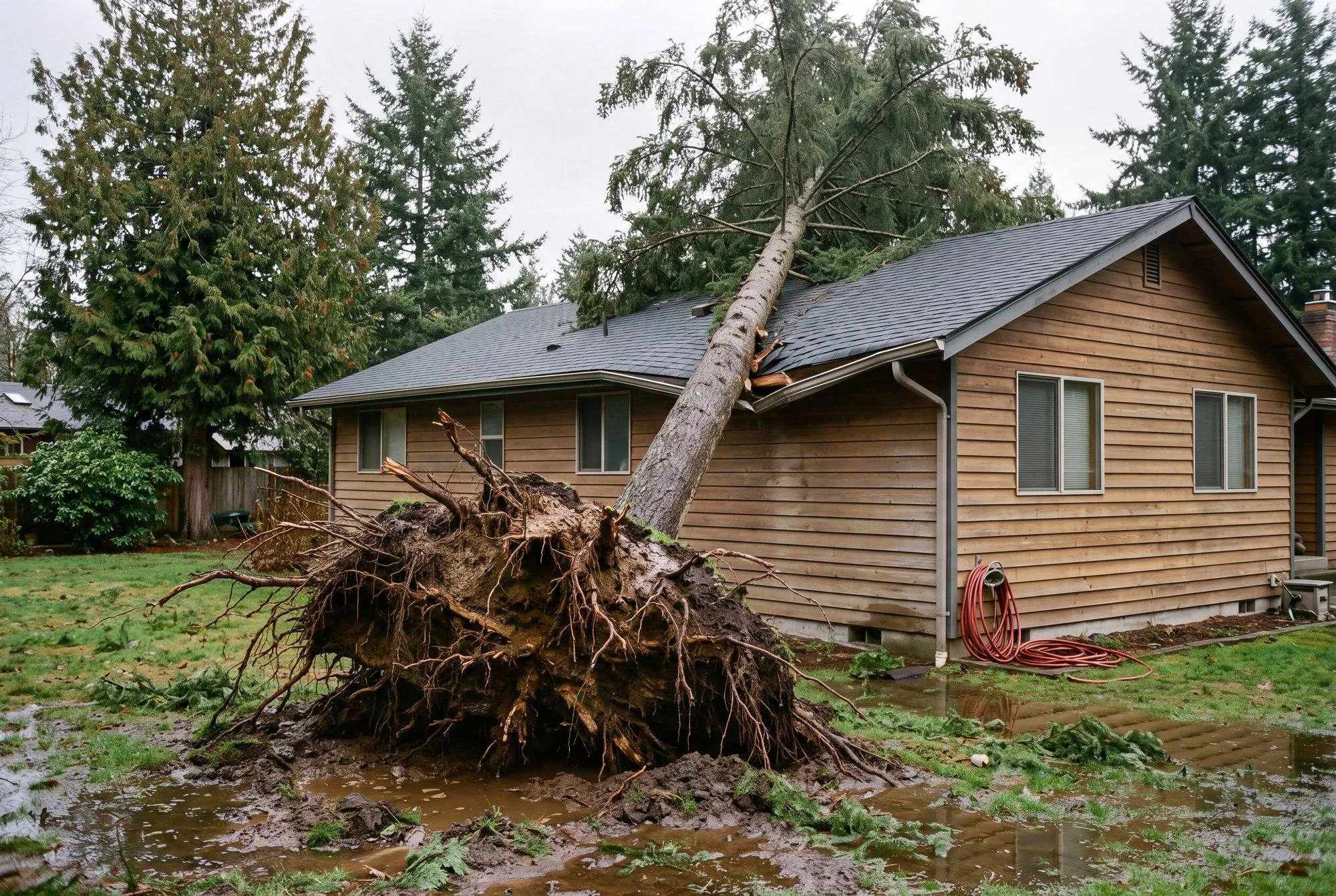
Thorough documentation serves multiple purposes: supporting insurance claims, guiding repair priorities, and creating records for future reference. For water penetration, photograph entry locations showing where water entered and spread patterns documenting how far moisture traveled through walls, ceilings, or floors. These images provide insurance documentation supporting your claim. Wind effects require capturing missing components like shingles or siding panels and impact points where debris struck your home, offering coverage confirmation for damage assessment.
Tree damage documentation should include root conditions showing how trees failed (whether roots pulled up, indicating saturated soil, or trunks snapped, indicating structural weakness) and soil stability around remaining trees that might pose continued risk. This information provides liability clarification when determining responsibility for damage. Electrical issues need timing documentation showing when power failed or surges occurred and affected systems listing everything that stopped functioning, offering claim substantiation for equipment replacement.
Immediate Protection That Prevents Escalation
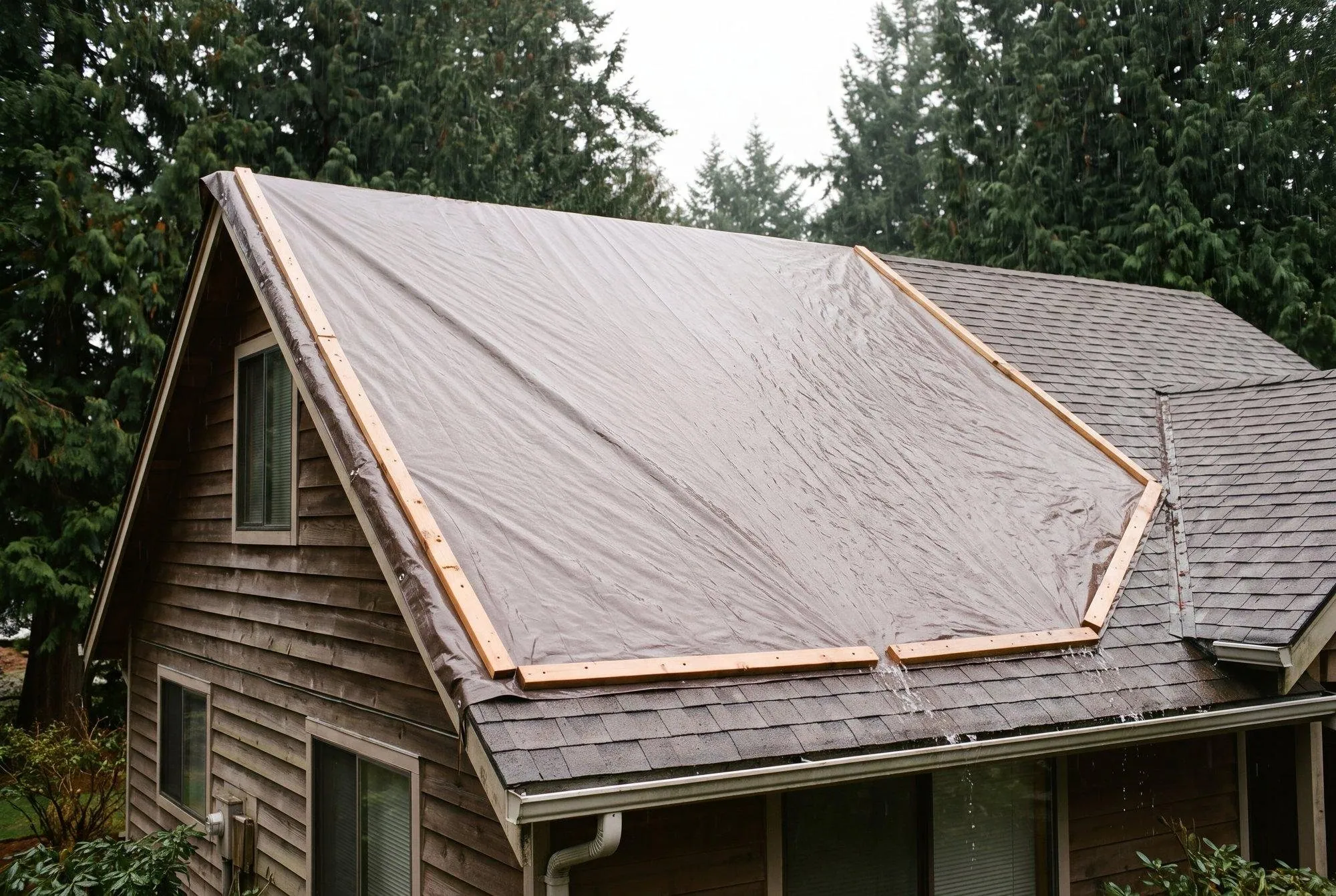
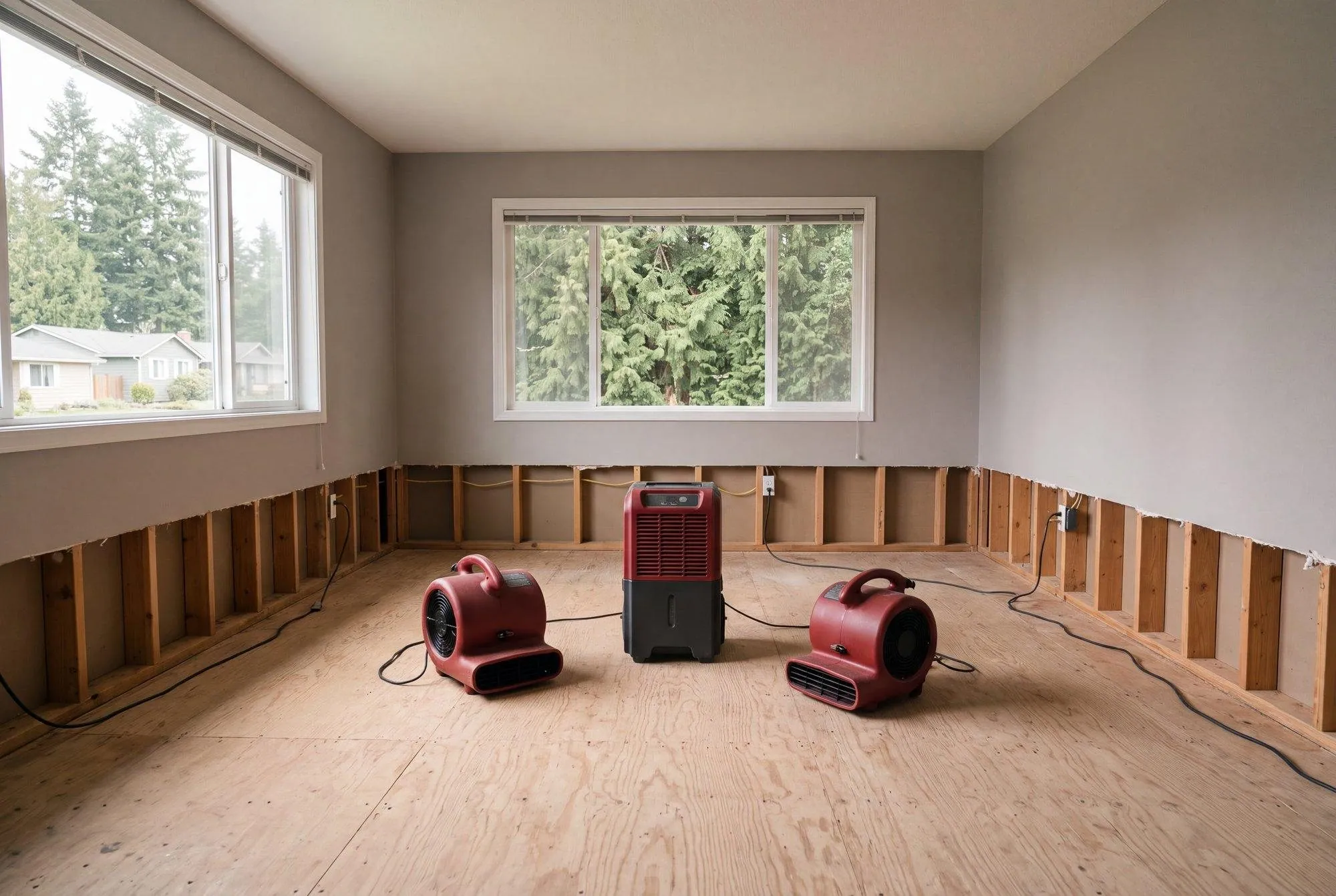
Quick interventions prevent additional damage while you arrange permanent repairs. Secure exposed areas properly for heavy precipitation using methods that withstand our rainfall intensity, since standard tarping often proves insufficient for Northwest conditions. Establish temporary drainage pathways directing water away from foundations and entry points. Stabilize loose components that might cause additional damage in subsequent weather events. Shield furnishings from moisture by moving them away from affected areas and covering with waterproof materials. Deploy dehumidification equipment immediately to begin moisture removal. In our climate, this isn't optional for areas exposed to water intrusion.
Northwest conditions require special attention to temporary repairs that might suffice elsewhere but fail in persistent rain. Multiple overlapping tarp layers secured with proper fasteners resist wind and rain more effectively than single layers. Weighted edges and frequent monitoring ensure protection remains effective through multiple storm cycles. Professional temporary repairs often prove worthwhile for damage requiring weeks to schedule permanent restoration.
Understanding Regional Insurance Considerations
Insurance claims in our area involve specific considerations reflecting Pacific Northwest conditions. Wind damage definitions in policies may distinguish between direct wind damage and wind-driven rain, affecting coverage for different damage types. Water intrusion provisions often contain specific language about gradual damage versus sudden events, and understanding these distinctions helps you document appropriately. Tree damage responsibility varies depending on whether trees were healthy or showed signs of disease or weakness before falling. Mold prevention requirements increasingly appear in policies serving our region, with specific timelines for mitigation efforts. Emergency service allowances cover immediate protection measures, though understanding what qualifies and coverage limits helps you make informed decisions.
Many policies contain specific requirements regarding mold prevention measures in our climate. Maintain thorough documentation of all moisture mitigation efforts including when dehumidifiers were deployed, how long they ran, humidity readings if available, and any professional drying services engaged. This documentation protects your coverage if mold issues develop despite mitigation efforts.
Selecting Professionals Who Understand Our Climate
Finding professionals familiar with Northwest construction proves essential for effective restoration. Local experience with similar damage scenarios means contractors understand how our specific weather patterns cause and complicate damage. Comprehensive moisture management understanding distinguishes contractors who can truly address water intrusion from those who simply patch visible damage while leaving moisture problems to develop behind walls. Familiarity with regional building standards ensures repairs meet local requirements for wind resistance, moisture barriers, and seismic considerations. Insurance claim process experience helps navigate documentation requirements and communication with adjusters. Year-round service availability matters in our climate where emergency repairs can't always wait for dry weather.
Seasonal Restoration Planning
Summer offers optimal conditions for major restorations with extended dry periods allowing thorough repairs, though limited timeframe and high contractor demand mean reserving services early. Fall suits preventative measures and pre-winter preparation, though transitional weather can interrupt schedules requiring flexibility. Winter limits work to emergency repairs with persistent precipitation demanding specialized moisture control measures and covered work areas. Spring allows comprehensive assessment of winter damage but weather delays remain common, making mold prevention particularly crucial as temperatures warm while moisture lingers.
Prevention Through Consistent Maintenance
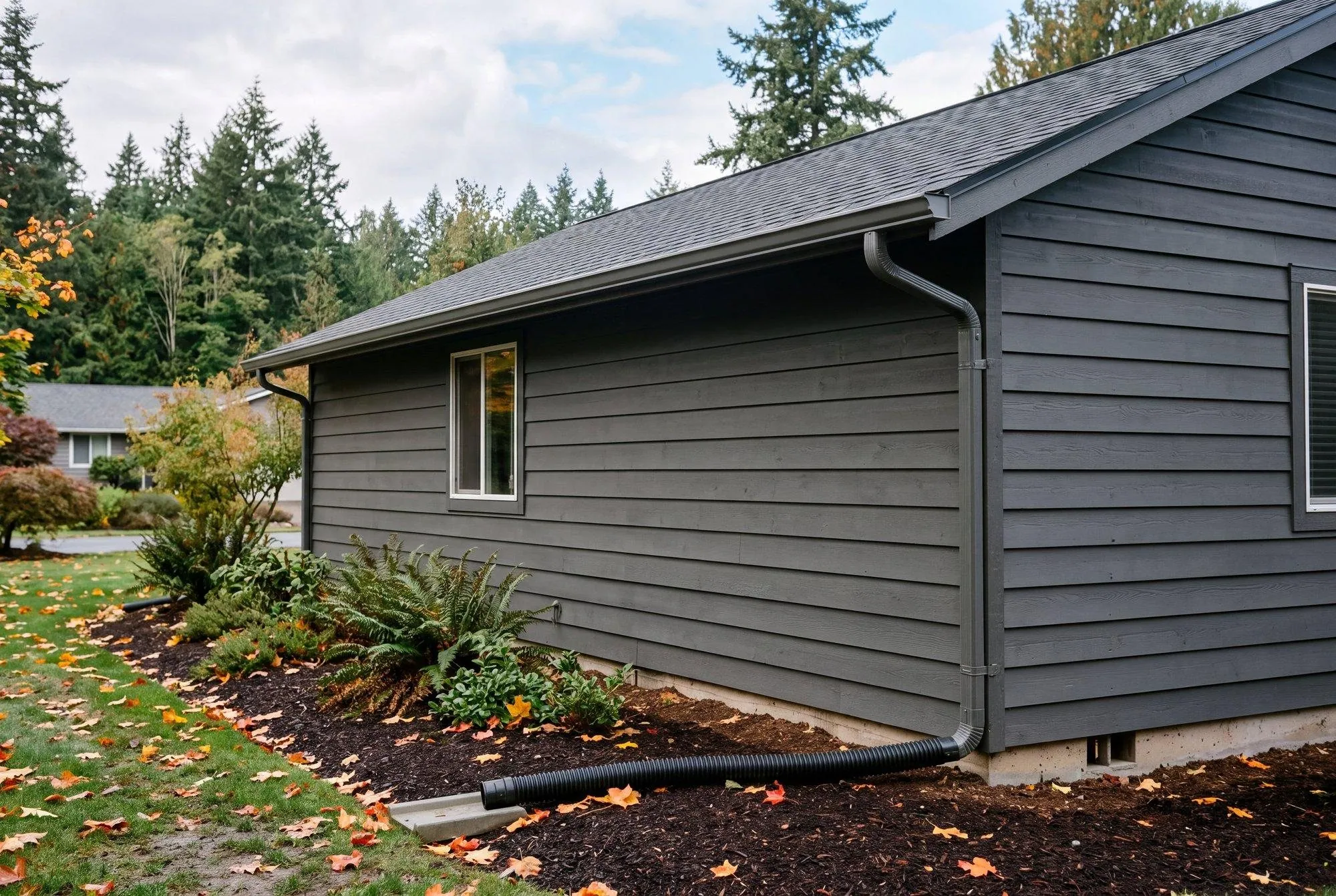
Preventing storm damage in our climate requires regular attention to vulnerable systems. Drainage and gutter systems need seasonal cleaning removing leaves and debris before fall rains begin, ensuring downspouts direct water away from foundations. Roof moss management prevents moisture retention that compromises shingles and allows leaks to develop. Tree health evaluation identifies risks before they become damage: weak branches, disease symptoms, and root stability all warrant professional arborist assessment. Foundation drainage performance needs monitoring ensuring water moves away from your home rather than pooling near foundations. Attic ventilation effectiveness prevents moisture accumulation that weakens roof structures and promotes mold growth.
Schedule comprehensive inspections during late summer when conditions permit thorough evaluation of all home systems. This timing allows completing recommended maintenance before storm season begins while weather still favors outdoor work.
Understanding storm damage in our unique climate requires recognizing that standard approaches from other regions often prove insufficient. The Pacific Northwest demands specialized methods for both restoration and prevention, combining immediate response with long-term protection strategies suited to our distinctive weather patterns.
Frequently asked questions
How rapidly does water damage become problematic in our climate?
Pacific Northwest conditions can transform water damage into significant concerns within 24 to 48 hours due to our elevated humidity and persistent moisture. Our climate never truly dries out even between rain events, meaning materials stay damp longer and mold establishes faster than in drier regions. Prompt intervention remains crucial, even for apparently minor leaks. What might be a simple cleanup in Arizona or Colorado becomes a race against mold growth in our climate. Professional drying services with industrial dehumidifiers and air movers often prove worthwhile investments preventing far more expensive mold remediation later.
What should homeowners inspect following high winds?
Beyond evident damage like missing shingles or downed trees, examine for lifted shingles that haven't blown away completely but now allow water underneath, compromised flashing around chimneys and skylights where wind can create gaps, and indications of water entry around windows and doorways where wind-driven rain finds vulnerabilities. Our characteristic wind-driven rain often finds paths that aren't immediately apparent, so look for water stains on ceilings and walls, dampness in attics, and moisture in basements that might indicate roof or foundation compromises. Check gutters for damage or separation that could direct water against your home rather than away from it.
What approaches best prevent mold development after storm damage?
Act promptly to dry affected areas using dehumidifiers and air circulation. Speed is everything with mold prevention. Remove standing water immediately, then focus on reducing humidity in affected spaces to below 60 percent. Monitor humidity conditions with inexpensive hygrometers available at hardware stores. Consider professional drying services equipped with industrial equipment. Our climate makes self-directed drying particularly challenging, and professional services often complete in days what might take homeowners weeks. Remove wet materials that can't be thoroughly dried like carpet padding, drywall that stayed saturated for extended periods, and insulation that absorbed water. These materials rarely dry adequately in our climate and become mold reservoirs.
Which storm preparation measures matter most in the Northwest?
Focus attention on drainage systems ensuring gutters and downspouts direct water away from your foundation effectively, roof condition identifying and addressing moss growth or damaged shingles before storms test them, and tree health having professionals evaluate large trees near your home for disease or structural weakness. Our most significant issues typically stem from water management failures during storms rather than direct wind impact. A compromised drainage system causes far more damage here than in drier climates where occasional heavy rain might be manageable but our persistent rainfall overwhelms inadequate systems. Regular maintenance of these three systems prevents the majority of storm damage we see.
How can homeowners verify temporary repair adequacy?
In our climate, temporary solutions must address both wind and heavy precipitation simultaneously. A tarp that stays in place during wind events but leaks during heavy rain fails to protect your home. Have qualified professionals verify any interim repairs, particularly those needed through our extended wet season from October through April. Proper temporary repairs use multiple layers of protection, secure fastening that resists sustained winds, and drainage considerations preventing water from pooling on tarps. Check temporary repairs after each weather event, tightening fasteners and repositioning materials as needed. Document your temporary protection efforts with photos for insurance purposes while demonstrating reasonable efforts to prevent additional damage.
Need help after a storm?
Call us at (360) 705-9957 or email quality@dickeys-inc.com. You can also visit our showroom at 3503 South Bay Rd NE, Olympia, WA 98506, Monday to Friday, 8:00 AM to 5:00 PM.