Why Knowing and Sharing Your Home Remodel Budget Matters

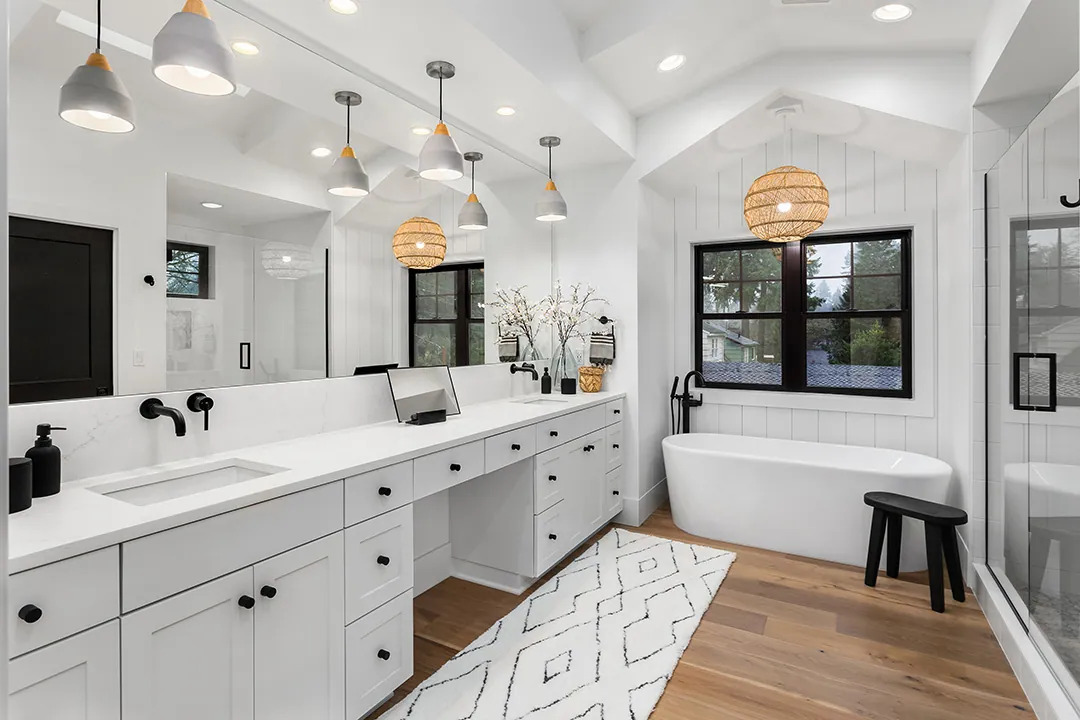
White bathroom with a long double vanity and makeup counter, black fixtures, rattan pendants, freestanding tub and wood floor

Knowing your home remodel budget, and telling your contractor what it is, is the fastest way to get a design and a quote you can actually build. Your budget sets the scope: which materials make sense, how much of the house you can take on, and where you’ll need to make trade-offs. When your contractor or designer knows the number up front, they can plan to it instead of guessing, and you skip the letdown of falling for a plan you can’t afford. You can see what different scopes look like in our recent remodeling projects.

Keeping your budget to yourself can feel safer, since it’s natural to worry that a contractor will simply spend up to it. That’s a fair worry. A good contractor uses the number to set priorities, not as a target, and should be able to explain every line of a bid.

Why Does Your Home Remodel Budget Matter So Much?

  1. It keeps the project on track. Remodels are exciting, and upgrades add up fast: nicer tile here, an extra outlet there, a better faucet because you’re already in there. A set budget gives you a reason to say no, or to trade one upgrade for another, before costs drift.
  2. It makes bids comparable. When every contractor prices the same scope against the same budget, you can see what each one actually includes. Without that, one bid may assume stock cabinets and another custom, and the lower bid isn’t really lower. Ask each contractor to list what’s included and what’s an allowance.
  3. It leaves room for surprises. Opening walls in an older South Sound home can turn up rot, outdated wiring or plumbing that has to be fixed before work can go on. If you build a contingency into your budget from the start, a surprise becomes a decision instead of a crisis.
  4. It helps you set priorities. Once you know your limit, you can rank what matters most. Maybe the layout change is worth more to you than premium countertops. Knowing that early keeps the money on the things you’ll notice every day.
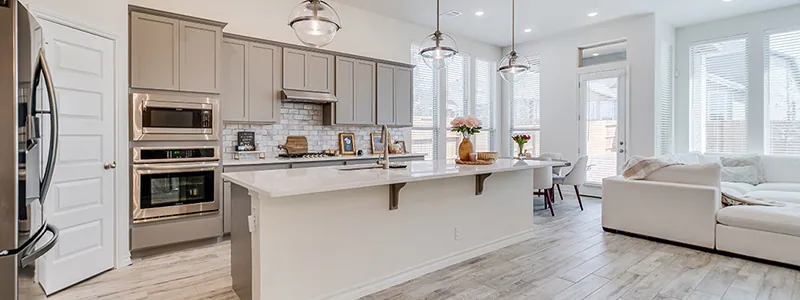
Kitchen with gray cabinets, stainless appliances, a white quartz island with pendants, open to a living room with a sofa

Sharing your budget doesn’t mean a contractor should spend all of it. It means the design conversation starts in the right place. At Dickey’s Remodel & Repair, we use your budget to suggest where to spend and where to save, then lay out the trade-offs in writing so you can decide.

How Do You Set a Realistic Remodel Budget?

  1. Decide what you can comfortably spend. Include savings, any financing you plan to use, and how much of a cushion you want to keep afterward.
  2. Hold back a contingency. Older homes and projects that open walls or floors need a bigger cushion than a cosmetic refresh.
  3. Rank your must-haves and nice-to-haves. Separate what has to change from what would be nice and what could wait for a later phase.
  4. Count the costs outside construction. Permits, design fees, new furniture or window coverings, and eating out while the kitchen is torn up all come out of the same pocket.
  5. Get an early reality check. A local contractor can tell you quickly whether your scope and your budget line up, before you spend time on detailed plans.

If your budget doesn’t cover everything, phasing the work is often a good answer: do the structural, plumbing and electrical work now and save some finishes for later. Planning a bigger project like an addition? Our guide to budgeting for a home addition walks through what drives the cost.

If you’re planning a remodel, settle on your budget early and share it with everyone involved: your partner, your designer and your contractor. It makes the process smoother and makes it much more likely you’ll be happy with the finished room.

Talking money with someone you just met is uncomfortable, and that’s normal. But a budget shared early usually means cleaner bids, fewer change orders and a result that matches what you pictured. If a contractor won’t talk budget with you, or a bid seems too good to be true, our post on what to do when a contractor is in over their head is worth a read.

Ready to Talk Through Your Remodel Budget?

Frequently Asked Questions

Should I tell my contractor my remodel budget?

Yes. Sharing your budget lets a contractor design a project you can actually afford instead of guessing and missing high or low. It also makes bids easier to compare, because each contractor is pricing toward the same target. A trustworthy contractor will use the number to set priorities and explain the trade-offs, not to pad the bid.

Will a contractor just spend my whole budget if I share it?

A good one won’t. Your budget is a ceiling, not a target. Ask for an itemized bid, ask what’s included versus what’s an allowance, and ask where you could save. If a contractor can’t explain why the bid lands where it does, that’s a red flag. At Dickey’s we walk through the trade-offs in writing so you can decide.

How much should I set aside for unexpected remodel costs?

Enough to cover the surprises your house is likely to hold. An older home, or a project that opens walls, floors or plumbing, needs a bigger cushion than a cosmetic update. Ask your contractor what they usually find in homes like yours and plan around that. We go over contingency for your specific project during a consultation.

What costs do homeowners forget to include in a remodel budget?

The common ones are permits, design fees, upgrades chosen mid-project, and repairs found once walls are open. People also forget living costs during the work, like eating out during a kitchen remodel or staying elsewhere during a big bathroom job, plus new furniture, lighting or window coverings to finish the room.

How do I get a realistic budget number for my remodel in Olympia?

Talk to a local contractor early. Costs vary widely by home, scope and materials, so online averages are rarely reliable. Dickey’s Remodel & Repair meets with homeowners in Olympia, Lacey, Tumwater and across Thurston County to look at the space, hear your goals and give a clear quote for the work.
Start your project

Request a Quote

Tell us about your project. We'll get back to you to set up a time to talk it through. Prefer the phone? Call (360) 705-9957.

Your contact information