If your contractor is in over their head, act early: put everything in writing, have one direct conversation about specific problems, and reread your contract before you make another payment. Most stalled remodels can be pulled back on track at that stage. If they can’t, you can get an independent assessment, try mediation, or end the contract properly and bring in someone new.
We’re Dickey’s Remodel & Repair, a design-build remodeler in Olympia, and we’ve worked in the South Sound for over 20 years. Every so often we get a call from a homeowner partway through a project that has gone sideways. The stress is real. So is the fact that there’s usually a sensible way out.
This guide walks through the warning signs, what to do first, how to protect your money and schedule, and how to switch contractors if it comes to that.
Signs Your Contractor Is Struggling
Common Red Flags During a Remodel
Poor communication and missed deadlines
Communication usually slips first. A contractor who used to answer the same day now takes days to call back, misses scheduled meetings, or sends someone who can’t answer your questions. That often means they’re overbooked or disorganized.
Delays happen on every remodel. Rot behind a wall or a late window order can push a schedule, and a good contractor tells you why and gives you a new date. A pattern of missed dates with no explanation and no revised schedule is the real warning sign.
Unexplained absences or slow progress
Days with nobody on site are worth noticing. A contractor who is in over their head may shift crews to jobs they feel surer about. You might see workers show up for an hour, start a task and leave it half done, or go a week without anyone at all.
Repeated mistakes or poor workmanship
Mistakes happen. The same mistake happening again is different. In any home renovation, work that keeps falling short of what you agreed to suggests the contractor lacks the skill or the attention the job needs.
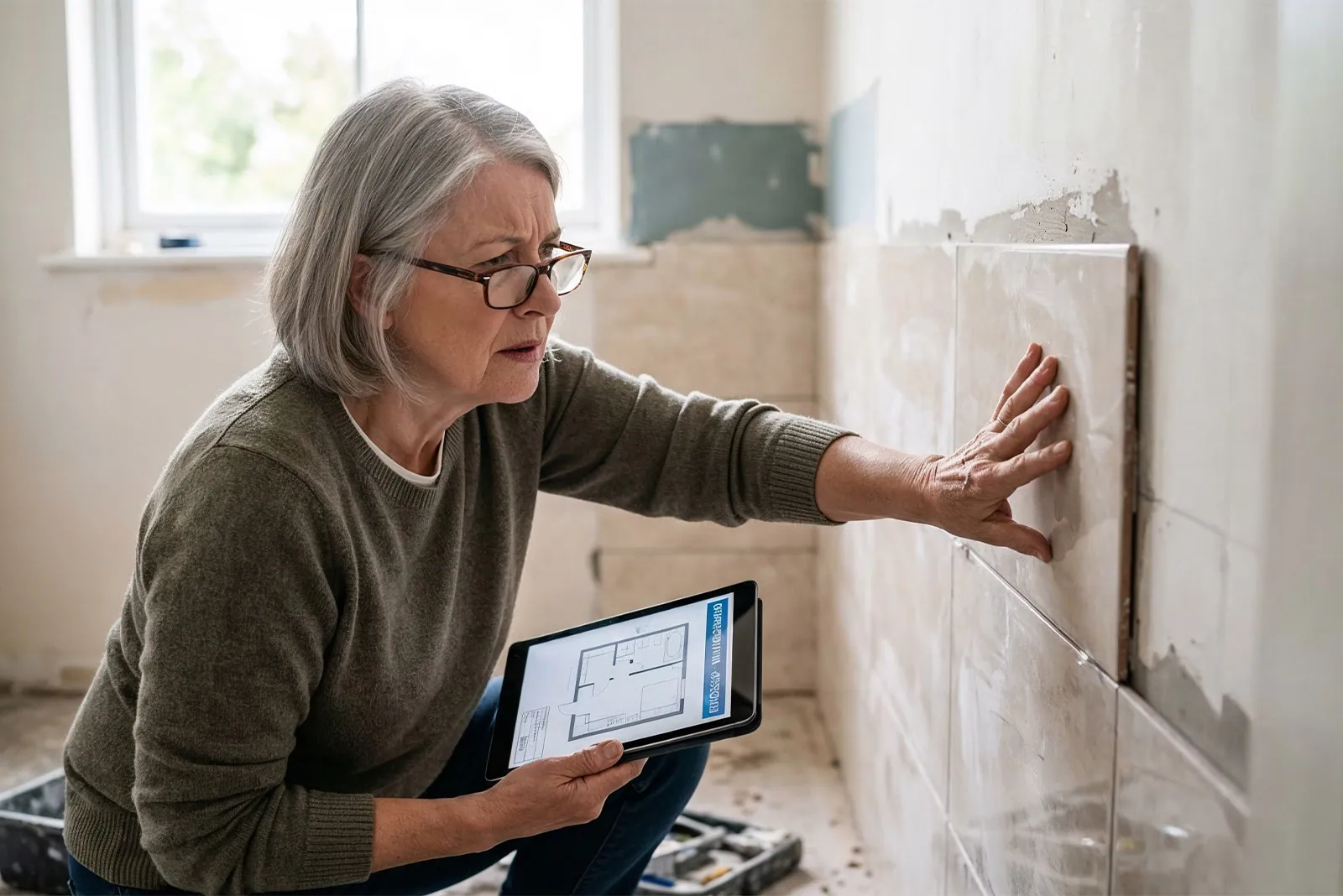
Look for uneven tile and lippage, gaps in trim, crooked or loose fixtures, and finishes that don’t match your selections. These come from either missing know-how or rushing to get done.
Dodging documentation or references
Ask for permits, inspection records or proof of insurance, and a struggling contractor may get vague. The paperwork is always “in process” or “at the office.”
The same goes for references. If they hesitated to give any, or the ones they gave are hard to reach or verify, they may have less experience than they claimed.
When the Project Stalls or Quality Slips
Work that doesn’t meet building codes
Code and inspections exist for safety, and a competent contractor plans around them. If inspections aren’t being scheduled, or work keeps failing them, take that seriously.
Watch for electrical work done without a permit, walls or beams changed without an engineer, and plumbing that doesn’t match local requirements. These are safety problems first. They also get expensive to correct and can cause trouble when you sell.
Cost overruns without a clear explanation
Some cost changes are normal, especially when demolition turns up hidden damage. Each one should come with a written explanation and a change order you sign before the work happens. Repeated requests for more money with no paperwork usually mean the job was underbid or poorly planned. Being clear about your remodel budget from the start helps prevent this.
At Dickey’s, we cover how changes are priced before work starts. As we tell clients during our process: “No matter how carefully we plan your project together, you may want to make some changes along the way. We are prepared cheerfully to accommodate any changes you want to make. Our Contract will explain how costs associated with your changes will be handled.”
Patterns in online reviews
If problems start, go back and read the contractor’s reviews again. When other homeowners describe the same communication, quality or scheduling issues you’re seeing, you’re looking at a pattern rather than a bad week.
Read how the contractor answers negative reviews, too. Owning a problem and explaining how it was fixed is a good sign. Getting defensive or blaming the customer tells you how your own complaint may be handled.
First Steps When Your Contractor Is in Over Their Head
Once you see a pattern, move quickly and calmly. The goal is to fix the problem while protecting your money, and to keep your options open if it can’t be fixed.
Document Everything in Writing
Keep emails, texts and photos
From here on, get everything in writing. After any phone call or job site conversation, send a short email that sums up what was said and agreed.
Take dated photos of the job regularly, including days when nothing changes. Photograph anything that will be covered up later, like plumbing, wiring and framing. Those pictures are hard to argue with if there’s a dispute.
Keep a daily log
Keep a simple project log. Write down when workers arrive and leave, what got done, and any questions or problems. A few lines a day builds a clear record of the timeline and makes patterns easy to show.
Add material deliveries, weather that stopped work, conversations and decisions. It feels like overkill until you need it.
Open a Direct Line of Communication
How to talk to your contractor about problems
Ask for a private conversation at a set time, and bring your notes and photos. Stay specific and calm. Anger tends to make a contractor defensive, and specifics give them something to fix.
Start by saying you want the project to succeed. Then go through each issue with the evidence you’ve gathered.
For example, skip “Your work is sloppy.” Try “The bathroom tile is uneven at these three spots, and the contract calls for a level finish.”
Set clear expectations
Agree on how things will work from here, and put it in writing. That usually covers:
- Specific milestones with completion dates
- Regular progress updates, preferably in writing
- How extra costs and changes get approved
- Quality standards that must be met before work moves on
Listen to their side. Sometimes there’s a real reason, like a supplier delay or a sick crew member. Stay firm on quality, communication and what the contract says.
When to talk to subcontractors or a project manager
If the general contractor isn’t responding, a project manager or a subcontractor may be able to explain what’s holding things up. Sometimes the breakdown is inside the contractor’s own team.
Be careful with this. Going around the contractor can damage the working relationship on site. Tell the contractor you plan to ask the subs about specific technical questions, and keep payment and contract issues between you and the general contractor.

Protecting Your Money and Your Timeline
When a contractor is in over their head, your priorities are simple: don’t pay ahead of finished work, and keep the project moving. A methodical approach does both.
Review Your Contract and Scope of Work
Know your rights and obligations
Your contract sets the rules for both of you. Read it again closely, especially the sections on:
- Performance and quality standards
- Change orders
- Payment schedule and conditions
- Dispute resolution
- Termination
Those clauses tell you what remedies you have and what steps you have to follow to use them. If the language is hard to follow, a construction attorney can explain it.
What to check: change orders, timelines, payment terms
Check whether every change to the original scope has a written change order signed by both of you. Unsigned verbal changes are a common source of disputes.
Then look at payments. Many contracts tie payments to milestones, not calendar dates. If you’ve paid ahead of the work that’s actually done, you have less leverage, so hold further payments to what the contract allows until things are resolved.
At Dickey’s, we go over the contract and explain every detail before you sign. In our words: “We will go over and explain every detail of our straightforward Contract.” When both sides understand the paperwork, disputes are rarer and easier to settle.
Request a Project Review or Mediation
Get an independent inspector or contractor to assess the work
If you’re worried about quality or code, hire an independent inspector or an experienced contractor to look at the work. A neutral written assessment tells you whether the work meets industry standards and your contract.
Tell your contractor you’re doing it, and frame it as getting clarity. A professional contractor will understand and fix legitimate problems the review finds.
When to consider mediation or legal advice
If talking hasn’t worked, mediation is often the next step. Many construction contracts require it before a lawsuit, and even when they don’t, it’s usually faster and cheaper than going to court.
A mediator keeps the conversation productive and helps both sides reach an agreement. Look for one with construction experience who understands the technical side.
If mediation fails, or you’re dealing with serious code violations, a large financial loss or a clear breach of contract, talk to a construction attorney. They know the regulations and the usual practices in the industry.
This is general information from a remodeling company, not legal advice. For your specific situation, talk to a Washington construction attorney.

When to Move On: Replacing Your Contractor
Sometimes it becomes clear the relationship can’t be saved. Recognizing that point, and leaving the right way, saves you more frustration, cost and delay.
Steps for Switching to a New Contractor
How to end a contract properly
Follow your contract’s termination clause. It spells out when either side can end the agreement and how.
That usually means written notice that names the specific breaches or failures to perform. Before the contractor pulls equipment and materials, photograph every finished and unfinished part of the job.
Work out what’s fairly owed for the work actually completed. An independent professional can help judge how much of the job is done and whether it’s acceptable.
Documents to collect
Before the old contractor leaves, make sure you have:
- Copies of all permits and inspection reports
- Manufacturer warranties for installed materials and fixtures
- Contact information for the subcontractors who worked on the job
- Records of every payment and any balance owed
- Detailed photos of the current state of the work
- Written confirmation that the contract is terminated
Your new contractor will need all of it to understand what’s done and what’s left.
How to choose a replacement contractor
Taking over someone else’s half-finished project is a hard job, and plenty of contractors will pass. When you interview replacements:
- Explain honestly what happened and why the first contractor left
- Share the original plans, what’s been completed and the problems you’ve found
- Ask directly about their experience finishing other contractors’ projects
- Call references from clients with similar projects
- Check their registration, bond and insurance more carefully than you did the first time
When Dickey’s is asked to take over a stalled project, we start with a careful assessment of what’s been done, what needs correcting and what’s left. Nobody can promise a stress-free handoff, but an honest assessment up front avoids surprises later.
How to Avoid This Next Time
Do your homework before hiring
Your strongest protection is careful vetting before you sign. Take time to:
- Look up the contractor’s registration, bond and insurance on the Washington State L&I website
- Check the Better Business Bureau and L&I for complaints or past violations
- Read reviews on more than one site, and pay attention to the specific complaints
- Ask to see similar projects they’ve completed
- Find out how long they’ve been in business under the same name
Check references, reviews and credentials
Don’t just collect references. Call them. Ask how the contractor communicated, whether they stayed on budget and schedule, how the work has held up, and how they handled surprises.
Look past the basic registration, too. Industry certifications, continuing education and trade association memberships show a contractor takes the work seriously.
Specialized work calls for specialized training. For aging-in-place and accessibility projects, look for a Certified Aging-in-Place Specialist (CAPS), a building and design credential from the National Association of Home Builders. Our team at Dickey’s includes CAPS-designated specialists.

How Dickey’s Remodel & Repair Keeps Projects on Track
Our Process for Communication and Quality
Weekly updates in writingYou’ll get a regular update that tells you what we plan to work on that week, along with any notes or questions that need your answer. You shouldn’t have to chase anyone down to find out what’s happening in your own house.
A project manager and a timeline before work starts
Each project has a project manager who is your main point of contact from start to finish. Before construction begins, your project specialist puts together a timeline with the key milestones marked, so you know what to expect and when.
3-year craftsmanship warranty with follow-up visits at 18 and 35 months
Our craftsmanship warranty runs for three years. We come back at 18 months to check in and fix anything that has come up. At 35 months, before the warranty ends, we do a home inspection and take care of anything we find.
Why South Sound Homeowners Work With Dickey’s
Local experience and a personal approachWe know how South Sound houses are built and what tends to go wrong in them, from older framing to the damage our rain can do. We also know construction is stressful, so we keep it personal. You’ll know who’s working in your home and what comes next.
What our clients say
Here’s what two Olympia-area homeowners told us about working with Dickey’s:
Wendy shares: “From bid, to contract, to communication, to the work itself, Dickey’s was absolutely top-notch. Tyler, who was the primary worker assigned, was friendly, had an eye for every detail (even details we didn’t think of), and cleaned up after every day of work so well that our pets and children were safe in the work area of the house.”
Pat notes: “This crew was the BEST – absolutely enjoyed working with them all to transform our master bathroom. Bruce was so knowledgeable and helpful in choosing the different products, Elijah and Mark were hard working and even filled in a hole in a wall not part of the project.”
Frequently Asked Questions About Struggling Contractors
What are the warning signs my contractor is in over their head?
The clearest signs are patterns: missed deadlines with no explanation, slow or no replies, days with nobody on site, and quality that keeps slipping. Other red flags include skipped permits or failed inspections, reluctance to put anything in writing, repeated requests for more money without change orders, and getting defensive when you ask about progress.
How should I approach my contractor if I’m concerned about the project?
Ask for a private conversation at a set time and bring specific examples, with photos and notes. Focus on the result you need rather than on blame, and listen to their explanation. Afterward, send an email summarizing what you both agreed to, including dates, so there’s a written record.
What documentation should I keep during a remodeling project?
Keep your contract, every signed change order, permits, inspection reports and all written messages with your contractor. Take dated photos regularly, especially before walls and floors are closed up. Save receipts and payment records, and keep a short daily log of who was on site, what got done and any problems.
Can I talk directly to subcontractors if I suspect issues?
Yes, but do it openly. Your main relationship is with the general contractor, so tell them you plan to ask the subcontractors specific technical questions. Keep payment and contract issues between you and the general contractor. Going around them quietly can make the job site harder to manage.
What rights do I have if the contractor isn’t meeting the contract terms?
Your contract defines your rights, but in general you can expect work that meets professional standards and the agreed specifications. If it doesn’t, you can usually give written notice of the problems, allow a reasonable time to correct them, and hold payment for unfinished or defective work as your payment schedule allows. A construction attorney can confirm your options.
How do I bring in a third-party inspector?
Hire a home inspector, a contractor with no stake in your project, or a specialist for electrical or structural work. Tell your current contractor about the review, invite them to be there, and ask the inspector for a written report listing any problems. That report gives both of you a neutral starting point.
When should I consider legal action against a contractor?
Treat legal action as a last resort, after direct conversation and usually mediation. Talk to a construction attorney if the contractor has abandoned the job, done unsafe work that violates code, taken money without doing the agreed work, or refuses to fix defective workmanship they’re responsible for.
What’s the right way to end a contract with a contractor?
Start with your contract’s termination clause and follow its steps. In most cases you’ll give written notice that names the specific breaches, photograph the current state of the job, settle what’s owed for completed work, and collect permits, warranties and records before the contractor removes their equipment.
How can I avoid hiring the wrong contractor next time?
Check the contractor’s registration, bond and insurance with Washington L&I, call several references, read reviews on more than one site, and ask to see similar finished projects. Notice how well they listen at the first meeting, how complete and timely their estimate is, and whether they’re willing to put everything in writing.
How does Dickey’s Remodel & Repair handle projects in Olympia?
Dickey’s follows an 8-step process built on planning up front and steady communication, with one lead worker assigned to your job. Our team includes Certified Aging-in-Place Specialists (CAPS) for aging-in-place work, our craftsmanship warranty runs three years with follow-up visits, and we’ve served the Olympia area for over 20 years. As we say, “We Care and It Shows!”
Get Your Project Back on Track
If your current remodel has stalled, or you’re planning a new one in Olympia, Lacey, Tumwater or elsewhere in the South Sound, we’re glad to talk it through. Call 360.705.9957 to set up a visit to our showroom at 3503 South Bay Rd NE, Olympia, WA 98506, or request a consultation.